Author: Harsheel Purohit

  • Integrating Lean Six Sigma with BIM: A Way For Better Quality Engineering

    Integrating Lean Six Sigma with BIM: A Way For Better Quality Engineering

    In the realm of construction and engineering, achieving optimal quality and efficiency is a constant pursuit. Lean Six Sigma principles offer a structured approach to process improvement. They focus on eliminating waste, reducing variation, and enhancing overall performance. When integrated with Building Information Modeling (BIM), these principles streamline project workflows and empower teams to deliver projects with superior quality and precision.In this blog post, we'll explore how Lean Six Sigma principles intersect with Quality Engineering through BIM. Additionally, we'll highlight their practical applications and real-world impact in human terms.

    Picture background

    Understanding Lean Six Sigma Principles:-

    Lean Six Sigma combines two powerful methodologies: Lean and Six Sigma. Each has its own set of principles aimed at achieving operational excellence:

    Lean principles emphasize the identification and elimination of non-value-added activities (waste) to streamline processes and improve efficiency.

    Six Sigma principles focus on reducing variation and defects in processes. As a result, this ensures the consistent delivery of products or services that meet or exceed customer expectations.

    Together, Lean Six Sigma provides a systematic approach to continuous improvement, driven by data and informed decision-making.

    Integrating Lean Six Sigma with Building Information Modeling (BIM):-

    Building Information Modeling (BIM) is a collaborative platform designed for creating and managing building projects. It utilizes intelligent 3D models that are enriched with data. Additionally, BIM facilitates coordination among various stakeholders, streamlining the entire process from design to construction. Integrating Lean Six Sigma principles with BIM amplifies the benefits across various stages of a construction project:

     1. Waste Reduction and Process Optimization:-

    Lean principles aim to identify and eliminate waste, such as unnecessary movement, waiting times, or overproduction. BIM aids in visualizing project workflows. This helps teams spot inefficiencies and streamline processes from design to construction and maintenance. For example, by optimizing material logistics based on BIM simulations, construction teams can minimize waste and improve resource utilization.

    Picture background

    2. Data-Driven Decision Making:-

    Six Sigma principles emphasize data analysis and statistical tools to reduce process variation and defects. BIM provides a rich data environment where performance metrics, design specifications, and construction progress can be monitored in real-time. This integration helps teams analyze data trends, identify root causes of issues, and implement targeted improvements. As a result, project quality and efficiency are enhanced.

    Picture background

    3. Continuous Improvement Culture:-

    Both Lean and Six Sigma promote a culture of continuous improvement and learning. By integrating these principles with BIM, construction teams can establish feedback loops and mechanisms for continuous monitoring and evaluation. For instance, lessons learned from one project phase can be applied to future phases or projects, fostering innovation and refinement in construction practices.

    4. Enhanced Collaboration and Communication:-

    BIM serves as a central hub where architects, engineers, contractors, and clients can collaborate on a unified platform. Lean Six Sigma principles enhance communication channels and promote cross-functional teamwork by aligning stakeholders with project goals and quality standards. This integration reduces misunderstandings, improves decision-making, and accelerates project timelines while maintaining high-quality standards.

    Case Studies and Real-World Applications:-

    Let's explore how Lean Six Sigma principles have been successfully applied in conjunction with BIM in real-world construction projects:

    Case Study 1: The Burj Khalifa, Dubai:-

    The construction of the Burj Khalifa, the world's tallest skyscraper, exemplifies the integration of Lean Six Sigma principles with BIM technology. Lean principles were employed to optimize construction processes and minimize waste, while Six Sigma methodologies ensured precise control over critical parameters such as structural integrity and safety. BIM facilitated seamless coordination among international design teams and contractors, enabling the project to achieve unparalleled heights of quality and efficiency.

    Picture background

    Case Study 2: Heathrow Airport Terminal 5, London:-

    Heathrow Airport's Terminal 5 project utilized Lean Six Sigma principles integrated with BIM to manage the complexities of one of Europe's largest airport terminals. BIM allowed for advanced simulations and logistical planning, optimizing the flow of materials and personnel during construction. Lean Six Sigma methodologies ensured that construction processes were continuously refined based on data-driven insights, resulting in the successful delivery of a state-of-the-art terminal that meets high-quality standards and operational efficiency.

    Picture background

    The Human Side of Lean Six Sigma with BIM:-

    Beyond technology and methodologies, integrating Lean Six Sigma with BIM highlights the crucial role of people in achieving project success. Since construction projects are inherently collaborative, they depend on the expertise, dedication, and creativity of diverse teams. Therefore, Lean Six Sigma principles enable these teams to collaborate more effectively. As a result, a culture of continuous improvement and innovation is both encouraged and celebrated.

    Embracing Sustainability and Future Challenges:-

    Looking ahead, the synergy between Lean Six Sigma and BIM is poised to address future challenges in construction, such as sustainability and resilience. As BIM evolves with advancements in sustainability modeling and lifecycle analysis, Lean Six Sigma principles will play a pivotal role in optimizing resource use, reducing carbon footprint, and enhancing the durability of built environments. Together, they pave the way for construction practices that are not only efficient and cost-effective but also environmentally responsible.

    Conclusion:-

    In conclusion, the integration of Lean Six Sigma principles with Building Information Modeling (BIM) represents a transformative approach to Quality Engineering in construction. By leveraging Lean principles to eliminate waste and Six Sigma methodologies to reduce variation, construction projects can significantly enhance efficiency, quality, and customer satisfaction. Consequently, teams can achieve superior outcomes and better meet client expectations. Moreover, BIM acts as a key enabler in this process. It offers a collaborative platform that fosters data-driven decisions and continuous improvement. Consequently, these practices together enhance overall project outcomes.

    As we adopt this integration, it's crucial to remember that construction excellence fundamentally revolves around people. Indeed, teams collaborate to innovate, solve problems, and deliver projects that shape our environment. Moreover, by integrating Lean Six Sigma principles with BIM, construction professionals can embark on a journey towards sustainable, resilient, and high-quality practices. This approach not only benefits the industry but also positively impacts communities and future generations.

    Read more on:-

    For more information about engineering, architecture, and the building & construction sector, go through the posts related to the same topic on the Pinnacle IIT Blogs page.

    Find out more accurately what we are going to take off in the course of applying leading new technologies and urban design at Pinnacle IIT.

    Subscribe to our YouTube channel and blog websites to obtain all the up-to-date information relating to construction matters.

  • Implementing Root Cause Analysis with BIM: Best Practices for Quality Engineering in [year]

    Implementing Root Cause Analysis with BIM: Best Practices for Quality Engineering in [year]

    In the world of construction and engineering, ensuring the highest standards of quality and efficiency is not just a goal but a continuous journey. Root Cause Analysis (RCA) stands as a pivotal methodology in quality engineering, offering a systematic approach to identifying the underlying reasons behind issues or failures. When integrated with Building Information Modeling (BIM), RCA becomes a powerful tool that not only enhances problem-solving capabilities but also fosters collaboration, innovation, and sustainable project outcomes. This blog explores the significance of Root Cause Analysis in quality engineering through the lens of BIM, highlighting its practical applications and the human elements that drive its success.

    Understanding Root Cause Analysis (RCA):-

    At its core, Root Cause Analysis helps teams uncover the fundamental reasons that contribute to problems or defects. Unlike superficial fixes that merely address symptoms, RCA delves deep into the layers of data, processes, and human factors to identify the root causes that, once resolved, prevent issues from recurring. Key principles of RCA include:

    Systematic Approach: RCA involves step-by-step investigation and analysis to trace problems back to their origins.

    Data-Driven Insights: It relies on empirical evidence and data analysis to uncover patterns, trends, and causal relationships.

    Multiple Perspectives: RCA considers a broad spectrum of factors, including technical, organizational, and human elements that contribute to issues.

    Continuous Improvement: The primary goal of RCA is not just to fix immediate problems but to implement lasting solutions that improve processes and prevent future occurrences.

    Picture background

    In the context of construction projects, where complexity and coordination are paramount, RCA, consequently, serves as a critical tool for maintaining quality, safety, and efficiency throughout all stages from design and planning to construction and maintenance. Furthermore, by integrating RCA, teams can effectively address potential issues, thereby ensuring smoother project execution and enhanced overall performance.

    Integrating Root Cause Analysis with Building Information Modeling (BIM):-

    Building Information Modeling (BIM) revolutionizes the construction industry by providing a digital platform for creating, managing, and visualizing building projects in a collaborative environment. When RCA principles are integrated with BIM, the synergy creates significant advantages:

    1. Visualizing Complex Systems and Interactions:-

    BIM enables stakeholders to create detailed 3D models of buildings that not only represent physical structures but also incorporate rich data about materials, systems, and components. This visual representation allows teams to visualize complex systems and interactions, facilitating a deeper understanding of how different elements integrate and potentially impact each other. For instance, architects, engineers, and contractors can simulate construction sequences to identify potential clashes or logistical challenges that could lead to delays or quality issues.

    2. Proactive Issue Identification and Mitigation:-

    One of the primary benefits of integrating RCA with BIM is the ability to proactively identify and mitigate issues before they escalate. By analyzing data from BIM models and conducting simulations, teams can foresee potential risks and root causes of problems. For example, during the design phase, RCA can uncover design flaws or inconsistencies that may impact structural integrity or functionality. By addressing these issues early, teams can minimize rework, reduce costs, and enhance overall project efficiency.

    3. Data-Driven Decision Making and Analysis:-

    RCA relies on rigorous data analysis to uncover root causes of issues. BIM provides a centralized repository of project data, including design specifications, material properties, and construction schedules. This data-driven environment enables teams to analyze trends, identify patterns, and correlate data points to pinpoint root causes accurately. If construction progress is delayed, RCA integrated with BIM can analyze workflow data to determine whether logistical challenges, material shortages, or design modifications are causing the issues.

    4. Enhancing Collaboration and Team Engagement:-

    BIM serves as a collaborative platform where architects, engineers, contractors, and clients can work together in real-time. Integrating RCA principles fosters a culture of collaboration and collective problem-solving among stakeholders. For example, when an issue arises on-site, teams can use BIM to access relevant data, collaborate on potential solutions, and implement corrective actions swiftly. This collaborative approach not only improves communication but also empowers teams to take ownership of problem-solving, enhancing engagement and accountability.

    Picture background

    Case Studies and Real-World Applications:-

    Let's explore how Root Cause Analysis integrated with BIM has been successfully applied in real-world construction projects:

    Case Study 1: Olympic Stadium, London:-

    During the construction of the Olympic Stadium in London, the team used BIM to model complex structural elements and logistical challenges. We used Root Cause Analysis techniques to investigate the delays and quality issues encountered during the construction phase. By analyzing BIM data and conducting simulations, teams identified root causes such as design changes, material shortages, and coordination issues among subcontractors. This integrated approach enabled teams to implement targeted solutions, optimize construction workflows, and successfully deliver the stadium on schedule for the Olympic Games.

    Picture background

    Case Study 2: High-Rise Residential Tower, New York City:-

    In the development of a high-rise residential tower in New York City, BIM and Root Cause Analysis were integrated to address structural performance concerns identified during preliminary testing. BIM facilitated detailed modeling and simulation of structural elements, while RCA techniques analyzed data to uncover design flaws and material specifications that contributed to performance issues. By applying corrective actions based on RCA findings, engineers were able to enhance structural integrity, mitigate risks, and ensure compliance with safety standards, ultimately delivering a safe and reliable residential complex.

    Picture background

    The Human Element of Root Cause Analysis with BIM:-

    Beyond technological advancements, the integration of Root Cause Analysis with BIM underscores the human element in construction projects. RCA encourages a proactive mindset among stakeholders, empowering them to collaboratively identify, analyze, and resolve issues that impact project quality and performance. By fostering a culture of continuous improvement and learning, RCA with BIM transforms challenges into opportunities for innovation and growth.

    Embracing Sustainability and Future Challenges:-

    Looking ahead, the integration of Root Cause Analysis with BIM is poised to address emerging challenges in construction, such as sustainability, resilience, and digital transformation. As BIM evolves with advancements in AI, machine learning, and IoT integration, RCA will leverage these technologies to enhance predictive capabilities and proactive risk management. This evolution promises to redefine how construction projects are planned, executed, and maintained, setting new benchmarks for quality, efficiency, and environmental responsibility.

    Conclusion:-

    In conclusion, Root Cause Analysis (RCA) is a cornerstone of quality engineering that empowers construction teams to uncover the underlying causes of issues and implement effective solutions. When integrated with Building Information Modeling (BIM), RCA not only enhances problem-solving capabilities but also fosters collaboration, data-driven decision-making, and continuous improvement. As we embrace this integration in a humanized context, we recognize that construction excellence is ultimately about people—teams working together to innovate, solve challenges, and deliver projects that shape communities and improve lives.

    By leveraging Root Cause Analysis with BIM, construction industry professionals can navigate complexities, mitigate risks, and achieve sustainable outcomes that meet the highest standards of quality and efficiency. Together, RCA and BIM pave the way for a future where construction projects are not only built to last but also built to inspire and endure.

    Read more on:-

    For more information about engineering, architecture, and the building & construction sector, go through the posts related to the same topic on the Pinnacle IIT Blogs page.

    Find out more accurately what we are going to take off in the course of applying leading new technologies and urban design at Pinnacle IIT.

    Subscribe to our YouTube channel and blog websites to obtain all the up-to-date information relating to construction matters.

  • Statistical Process Control And BIM: A Better Way For Quality Engineering

    Statistical Process Control And BIM: A Better Way For Quality Engineering

    In the dynamic landscape of construction and engineering, maintaining consistent quality throughout project execution is crucial for success. Statistical Process Control (SPC) offers a robust methodology to monitor and control processes, identifying variations early and implementing corrective actions proactively. When integrated with Building Information Modeling (BIM), SPC not only enhances the precision and reliability of construction projects but also fosters collaboration, innovation, and sustainable practices. This blog explores the significance of Statistical Process Control in quality engineering through the lens of BIM, emphasizing its practical applications and the human aspects that drive its effectiveness.

    Picture background

    Understanding Statistical Process Control (SPC):-

    Statistical Process Control is a methodology that monitors and controls processes to ensure consistent operation and adherence to specified quality standards. Key principles of SPC include:

    Data Analysis: SPC relies on statistical techniques to analyze process data and identify variations that may affect quality.

    Process Monitoring: It involves continuously monitoring process performance using control charts and other statistical tools.

    Root Cause Analysis: SPC helps identify root causes of variations so that teams can take corrective actions to improve process stability and consistency.

    Continuous Improvement: The goal of SPC is to achieve ongoing improvement in process capability and product quality.

    In construction projects, where numerous variables and dependencies exist, SPC provides a structured approach to maintaining quality standards across different phases from design and planning to construction and commissioning.

    Integrating Statistical Process Control with Building Information Modeling (BIM):-

    Building Information Modeling (BIM) serves as a collaborative platform that enables stakeholders to create, manage, and visualize building projects through intelligent 3D models. When BIM integrates SPC principles, it enhances the capabilities and benefits in several critical ways:

    1. Real-Time Data Analysis and Monitoring:-

    BIM generates a wealth of data related to project specifications, material properties, construction schedules, and more. By integrating SPC techniques with BIM, stakeholders can analyze real-time data to monitor process performance and identify deviations from expected standards. For example, during construction, SPC can track parameters such as material usage, work progress, and quality inspections to ensure that activities are within acceptable limits and quality is maintained.

    Picture background

    2. Predictive Analytics and Risk Management:-

    SPC integrated with BIM enables predictive analytics by analyzing historical data trends and patterns. This capability allows construction teams to anticipate potential quality issues or deviations before they occur. For instance, predictive models can forecast potential conflicts or clashes in building systems based on BIM simulations, enabling proactive adjustments to mitigate risks and ensure smooth project execution.

    Picture background

    3. Collaboration and Stakeholder Engagement:-

    BIM facilitates collaboration among multidisciplinary teams, including architects, engineers, contractors, and clients. Integrating SPC fosters a collaborative environment where stakeholders share data, insights, and responsibilities for maintaining quality standards. For example, teams can share SPC control charts to visualize process performance and encourage collective problem-solving efforts. This collaborative approach enhances transparency, communication, and accountability throughout the project lifecycle.

    4. Continuous Improvement and Quality Assurance:-

    SPC promotes a culture of continuous improvement by providing quantitative measures of process variability and performance. Additionally, by analyzing SPC charts and metrics derived from BIM data, construction teams can identify opportunities for process optimization and quality enhancement.. For example, trends in quality metrics can highlight areas where adjustments in construction techniques, materials selection, or workflow processes can lead to better outcomes and reduced waste.

    Case Studies and Real-World Applications:-

    Let's explore how Statistical Process Control integrated with BIM has been successfully applied in real-world construction projects:

    Case Study 1: Terminal Expansion Project, International Airport:-

    Engineers utilized BIM to model complex structural elements and logistical challenges during the expansion of an international airport terminal. Statistical Process Control techniques were integrated to monitor concrete pouring processes and ensure consistency in material properties and curing times. By analyzing real-time data from BIM models and SPC control charts, construction teams were able to maintain uniform quality standards throughout the project, despite variations in environmental conditions and work shifts.

    Picture background

    Case Study 2: Sustainable Housing Development, Urban Area:-

    In a sustainable housing development project, BIM served as a central platform for coordinating design, construction, and sustainability considerations. Statistical Process Control was applied to monitor energy efficiency parameters and indoor environmental quality metrics. By integrating SPC with BIM, project teams could track performance indicators such as thermal comfort levels and energy consumption patterns. This data-driven approach enabled continuous adjustments and improvements to building systems, ensuring that sustainable objectives were met while maintaining high-quality standards.

    Picture background

    Embracing the Human Side of Statistical Process Control with BIM:-

    Beyond technological advancements, the integration of Statistical Process Control (SPC) with BIM also emphasizes the human element in construction projects. Specifically, SPC encourages proactive problem-solving and collaboration among stakeholders, empowering them to collectively monitor and improve process performance. Furthermore, by fostering a culture of data-driven decision-making and continuous learning, SPC with BIM ultimately transforms challenges into opportunities for innovation and sustainable practices.

    Future Perspectives and Challenges:-

    Looking ahead, the integration of Statistical Process Control with BIM is poised to address emerging challenges in construction, such as digital transformation, resilience, and sustainability. As BIM evolves with advancements in AI, machine learning, and IoT integration, SPC will leverage these technologies to enhance predictive capabilities and proactive risk management. Consequently, this evolution promises to redefine how construction projects are planned, executed, and maintained, setting new benchmarks for quality, efficiency, and environmental responsibility. Furthermore, the integration of these technologies will enable more streamlined workflows and improved collaboration among stakeholders.

    Conclusion:-

    In conclusion, Statistical Process Control (SPC) is a cornerstone of quality engineering that empowers construction teams to monitor, analyze, and improve process performance systematically. When integrated with Building Information Modeling (BIM), SPC enhances data-driven decision-making, fosters collaboration, and promotes continuous improvement throughout project lifecycles. As we embrace this integration in a humanized context, we recognize that construction excellence is ultimately about people. Indeed, it involves teams working together to innovate, solve challenges, and deliver projects that enhance communities and improve lives.

    By harnessing Statistical Process Control with BIM, construction industry professionals can navigate complexities, mitigate risks, and achieve sustainable outcomes. Consequently, they meet the highest standards of quality and efficiency. Together, SPC and BIM pave the way for a future where construction projects are not only built to last but also built to inspire and endure.

    Read more on:-

    For more information about engineering, architecture, and the building & construction sector, go through the posts related to the same topic on the Pinnacle IIT Blogs page.

    Find out more accurately what we are going to take off in the course of applying leading new technologies and urban design at Pinnacle IIT.

    Subscribe to our YouTube channel and blog websites to obtain all the up-to-date information relating to construction matters.

  • Ways How BIM Transforms Quality Assurance in Construction Projects

    Ways How BIM Transforms Quality Assurance in Construction Projects

    In the realm of construction and engineering, ensuring high-quality outcomes is paramount to the success and longevity of projects. Quality Assurance (QA) and Quality Control (QC) play vital roles in achieving and maintaining desired standards, interconnecting two distinct processes. When integrated with Building Information Modeling (BIM), QA and QC methodologies not only enhance efficiency and precision but also foster collaboration, innovation, and accountability among project stakeholders. This blog explores the dynamics between Quality Assurance and Quality Control in construction through the lens of BIM, emphasizing their practical applications and the human elements that drive their effectiveness.

    Understanding Quality Assurance (QA) and Quality Control (QC):-

    Before delving into their integration with BIM, it's essential to grasp the fundamental differences between QA and QC:

    Quality Assurance (QA): QA includes implementing planned and systematic activities within the quality management system to ensure adherence to processes and standards. It focuses on preventing defects before they occur through process improvement, training, and adherence to standards and procedures.

    Quality Control (QC): QC, on the other hand, involves the operational techniques and activities used to fulfill requirements for quality. It is a reactive process that focuses on identifying defects in the finished product or during construction activities through inspections, testing, and corrective actions.

    Picture background

    While QA is proactive and aims to prevent issues, QC is reactive and aims to identify and correct issues that arise during or after construction activities. Together, they form a comprehensive approach to achieving and maintaining high-quality standards in construction projects.

    Integrating Quality Assurance and Quality Control with Building Information Modeling (BIM):-

    Building Information Modeling (BIM) serves as a transformative technology in the construction industry, enabling stakeholders to create, manage, and visualize building projects in a collaborative digital environment. Moreover, integrating QA and QC methodologies with BIM enhances their capabilities and benefits in several critical ways:

    1. Standardization and Process Optimization:-

    BIM provides a centralized platform where project teams can standardize design, construction, and operational processes. Additionally, integrated with BIM, QA principles ensure project lifecycles follow standardized procedures and best practices. For example, stakeholders can implement QA processes to establish protocols using BIM-generated models and data for design reviews, material selection, and construction methods.

    Picture background

    2. Early Detection of Issues and Risk Mitigation:-

    QC processes integrated with BIM enable early detection of issues and potential risks during design and construction phases. BIM's visualization capabilities allow stakeholders to conduct virtual inspections, clash detections, and simulations to identify conflicts, deviations, or deficiencies in design elements or construction plans. For instance, QC inspections ensure compliance with design specifications and regulatory requirements, verifying that quality standards are met before physical construction begins.

    Picture background

    3. Data-Driven Decision Making and Continuous Improvement:-

    BIM's data-rich environment facilitates data-driven decision-making and continuous improvement initiatives. QA principles integrated with BIM enable stakeholders to analyze performance metrics, project progress, and quality indicators in real-time. This data analysis helps identify trends, patterns, and areas for improvement, enhancing overall project efficiency and quality outcomes. For example, QA metrics derived from BIM data can track key performance indicators (KPIs) such as schedule adherence, cost management, and stakeholder satisfaction.

    Picture background

    4. Collaboration and Stakeholder Engagement:-

    BIM fosters collaboration among multidisciplinary teams, such as architects, engineers, contractors, and clients, throughout project phases. By integrating QA and QC with BIM, this promotes a collaborative environment where stakeholders share responsibilities for maintaining quality standards and resolving issues collectively. For example, QA processes can involve regular meetings and workshops where stakeholders review BIM models, discuss quality objectives, and align on strategies to achieve them. This collaborative approach enhances transparency, communication, and accountability across project teams.

    Case Studies and Real-World Applications:-

    Let's explore how Quality Assurance and Quality Control integrated with BIM have been successfully applied in real-world construction projects:

    Case Study 1: Healthcare Facility Expansion Project:-

    In the expansion of a healthcare facility, BIM was used to model intricate MEP (Mechanical, Electrical, Plumbing) systems and patient care areas. Quality Assurance principles were integrated to establish stringent protocols for infection control, patient safety, and operational efficiency. BIM-enabled simulations and QC inspections verified compliance with healthcare regulations and design specifications, ensuring that quality standards for patient care environments were consistently met throughout the project.

    Picture background

    Case Study 2: Mixed-Use Development, Urban Area:-

    During the construction of a mixed-use development in an urban area, BIM served as a collaborative platform for coordinating architectural, structural, and environmental considerations. They integrated Quality Control processes with BIM to conduct virtual inspections and monitor construction progress. BIM-generated models facilitated QC inspections to identify and rectify design clashes, material discrepancies, and construction defects promptly. This integration ensured that the project adhered to quality standards while meeting tight deadlines and budget constraints.

    Picture background

    The Human Element of QA and QC with BIM:-

    Beyond technological advancements, the integration of Quality Assurance and Quality Control with BIM underscores the human element in construction projects. Additionally, QA emphasizes proactive planning, training, and process improvement to prevent issues and promote consistent quality outcomes. Meanwhile, QC focuses on meticulous inspections, testing, and corrective actions to address deviations and ensure compliance with quality standards.

    By fostering a culture of collaboration, innovation, and continuous learning, QA and QC with BIM empower construction teams to navigate challenges. Moreover, they mitigate risks and deliver projects that exceed expectations. Stakeholders actively engage in problem-solving, decision-making, and quality improvement initiatives. Consequently, this enhances project outcomes and fosters long-term success.

    Embracing Sustainability and Future Challenges:-

    Looking ahead, the integration of Quality Assurance and Quality Control with BIM will address emerging challenges in construction, such as sustainability, resilience, and digital transformation. As BIM evolves with advancements in AI, machine learning, and IoT integration, QA and QC will leverage these technologies to enhance predictive capabilities, optimize resource allocation, and improve project efficiencies.

    This evolution promises to redefine how construction projects are planned, executed, and maintained, setting new benchmarks for quality, sustainability, and stakeholder satisfaction. By embracing QA and QC with BIM, construction industry professionals can pioneer innovative solutions, achieve sustainable outcomes, and shape resilient built environments for future generations.

    Conclusion:-

    In conclusion, Quality Assurance (QA) and Quality Control (QC) are indispensable components of quality management in construction projects, each playing distinct roles in ensuring adherence to standards and achieving desired outcomes. When integrated with Building Information Modeling (BIM), QA and QC methodologies enhance collaboration, precision, and efficiency throughout project lifecycles.

    By harnessing BIM's capabilities for visualization, data analysis, and collaboration, construction teams can proactively manage quality, mitigate risks, and drive continuous improvement. As we embrace this integration in a humanized context, we recognize that construction excellence is ultimately about people—teams working together to innovate, solve challenges, and deliver projects that enhance communities and improve lives.

    By integrating Quality Assurance and Quality Control with BIM, construction industry professionals can navigate complexities, embrace opportunities, and pave the way for a future where construction projects are not only built to last but also built to inspire and endure.

    Read more on:-

    For more information about engineering, architecture, and the building & construction sector, go through the posts related to the same topic on the Pinnacle IIT Blogs page.

    Find out more accurately what we are going to take off in the course of applying leading new technologies and urban design at Pinnacle IIT.

    Subscribe to our YouTube channel and blog websites to obtain all the up-to-date information relating to construction matters.

  • Kaizen Strategies in Construction 2026

    Kaizen Strategies in Construction 2026

    Implementing kaizen in construction empowers contracting teams to systematically eliminate jobsite waste, streamline subcontractor coordination, and improve structural quality through continuous incremental refinements. While traditional construction projects suffer from 15% to 30% material waste and chronic scheduling overruns, lean construction frameworks deploy 5S workplace organization, Last Planner System (LPS) milestone commitments, and 4D Building Information Modeling (BIM) to drive site productivity.

    Key Takeaways (Quick Overview)

    • The 8 Wastes (Muda) Eliminated: Targets overproduction, waiting times, transit bottlenecks, defective re-work, over-processing, excess inventory, wasted motion, and underutilized worker potential.
    • 5S Jobsite Framework: Sort, Set in order, Shine, Standardize, and Sustain applied directly to material laydown areas and tool cribs.
    • BIM & Lean Synergy: 4D scheduling in Navisworks Manage visualizes daily logistics and eliminates trade stacking before physical work starts.
    • Professional Project Management Training: Master digital project delivery in the BIM courses with placement at Pinnacle IIT.

    Editorial Note: Technical review conducted in October 2026 by Harsheel Purohit, Director of Project Delivery. Benchmarked against Lean Construction Institute (LCI) standards, Toyota Production System (TPS) guidelines, and ISO 9001 quality management.

    Target Audience & Practical Use Case: Tailored for construction project managers, site superintendents, quality assurance engineers, and general contractors. Use these operational Kaizen protocols to shorten project durations and reduce rebar and concrete scrap rates on commercial builds.

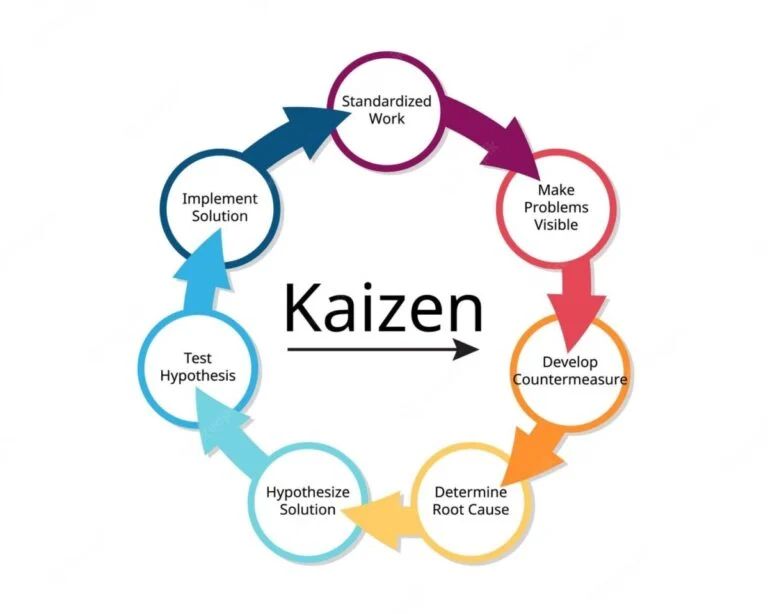
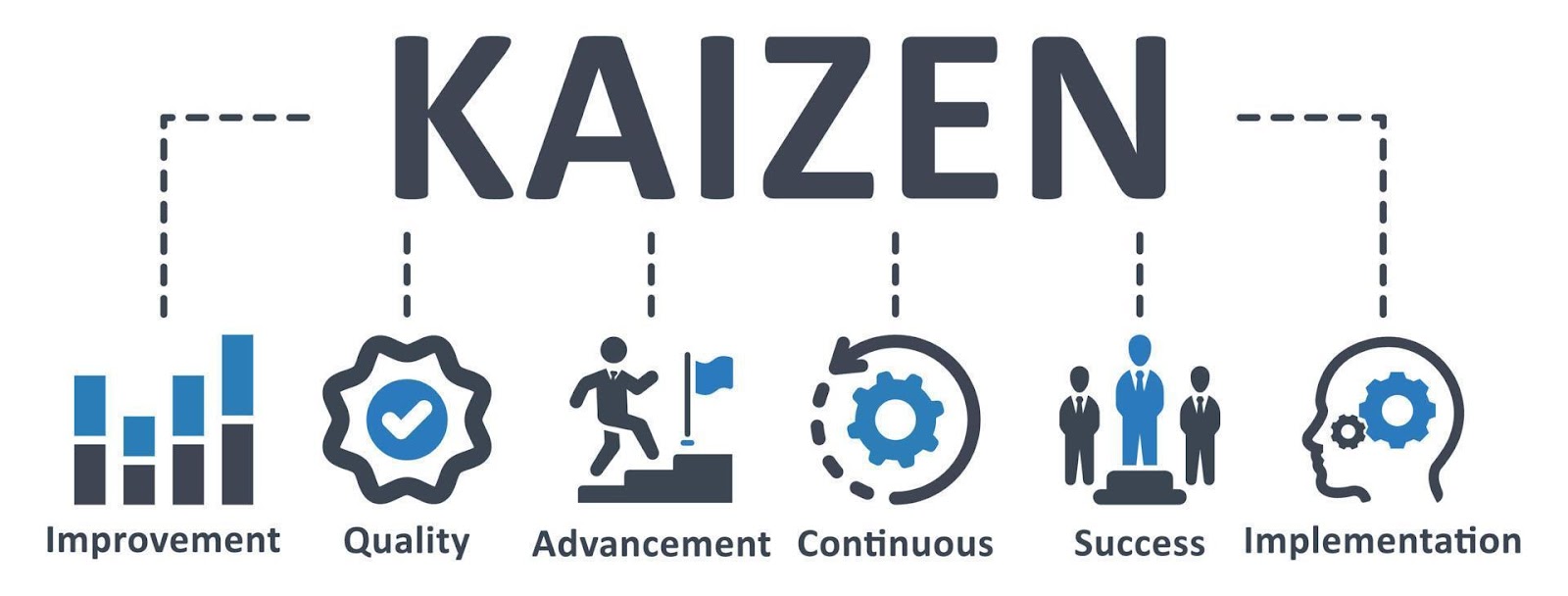
    Kaizen continuous improvement principles applied to construction project delivery
    Figure 1: Core pillars of continuous incremental quality improvement on construction jobsites.

    What Is Kaizen and How Does It Transform Construction Projects?

    Direct Answer: Kaizen is a Japanese philosophy of continuous, incremental improvement that engages all project participants—from executive project directors to trade foremen—in identifying inefficiencies and standardizing safer, faster workflows. In construction, Kaizen transforms jobsites by replacing reactive crisis management with proactive Daily Standup Huddles, Gemba walks, and root-cause analysis.

    Traditional Contracting vs. Lean Kaizen Construction Matrix

    Operational DimensionTraditional ConstructionKaizen Lean ConstructionPerformance Gain
    Workplace LayoutDisorganized staging & scattered tools5S standardized color-coded laydown zonesSaves 45 minutes/worker daily
    Schedule ManagementStatic Critical Path Method (CPM)Last Planner System (LPS) weekly lookaheadImproves Percent Plan Complete to 85%+
    Defect ResolutionEnd-of-project snag list punch listsZero-defect root cause analysis (5 Whys)Reduces warranty rework costs by 60%
    Material DeliveryBulk staging leading to weather damageJust-In-Time (JIT) batch deliveryDecreases material scrap below 3%
    Coordination Technology2D paper drawings checked on siteFederated 4D BIM simulationsResolves 100% of spatial clashes digitally
    Empowering frontline construction workers through daily Kaizen huddles
    Figure 2: Daily field huddles empowering trade workers to solve logistical bottlenecks.

    How Do You Implement the 5S Methodology on Construction Jobsites?

    Direct Answer: Implement 5S on construction jobsites by executing five consecutive steps: Sort (Seiri) to red-tag and remove unusable scrap; Set in Order (Seiton) to establish designated tool and material zones; Shine (Seiso) to clean work areas daily; Standardize (Seiketsu) to post visual signage; and Sustain (Shitsuke) to conduct weekly safety and housekeeping audits.

    Digital BIM workflow supporting lean continuous improvement
    Figure 3: Synchronizing 4D BIM logistics with visual jobsite staging plans.

    Frequently Asked Questions on Kaizen in Construction (FAQ)

    What are the 8 types of waste targeted by Kaizen on construction sites?

    The 8 wastes (DOWNTIME) are: Defects (rework), Overproduction (pre-mature pouring), Waiting (idle trade crews), Non-utilized talent, Transportation (double-handling materials), Inventory (excess materials blocking walkways), Motion (searching for tools), and Extra-processing (over-finishing unexposed concrete).

    How does 4D BIM support lean construction?

    4D BIM integrates 3D parametric models with project timelines in tools like Navisworks TimeLiner. This allows project managers to simulate crane radius operations, concrete pour sequences, and material staging zones weeks before crews mobilize.

    Master Digital Construction Management & 4D BIM

    Learn lean project delivery, Navisworks 4D scheduling, and clash detection on live commercial projects with 100% placement support at Pinnacle IIT.

    Download Construction Management Syllabus →

  • Ways How BIM Transforms Supplier Quality Management in Construction

    Ways How BIM Transforms Supplier Quality Management in Construction

    Supplier Quality Management (SQM) is a critical aspect of construction project management. Ensuring that materials, components, and services provided by external suppliers meet defined quality standards and specifications. In an industry where project success hinges on the reliability and consistency of supplied resources. Effective SQM practices are essential for maintaining construction schedules, controlling costs, and delivering high-quality outcomes. This blog highlights how Supplier Quality Management in construction, combined with BIM, improves collaboration, efficiency, and human impact in supply chains.

    Understanding Supplier Quality Management (SQM) in Construction:-

    Supplier Quality Management ensures suppliers consistently deliver products and services that meet or exceed project requirements through effective processes and strategies. Key components of SQM include:

    Supplier Selection: Identifying and selecting suppliers based on their capabilities, reliability, and adherence to quality standards.

    Quality Assurance: Implementing measures to verify and validate the quality of incoming materials, components, and services.

    Performance Monitoring: Regularly track supplier performance with key metrics and KPIs to ensure they meet quality, schedule, and cost expectations effectively.

    Continuous Improvement: Collaborating with suppliers to identify opportunities for process optimization, quality enhancement, and cost efficiency.

    Picture background

    In construction, effective SQM reduces risks and defects, ensuring projects stay on time, within budget, and meet all milestones.

    Integrating Building Information Modeling (BIM) with Supplier Quality Management:-

    Building Information Modeling (BIM) transforms construction by offering a collaborative digital platform for planning, designing, building, and maintaining projects efficiently. When integrated with Supplier Quality Management practices, BIM enhances transparency, communication, and data-driven decision-making throughout the supply chain:

     1. Digital Supply Chain Visualization:-

    BIM enables stakeholders to visualize the entire supply chain from initial procurement to installation through 3D models and digital simulations. This visualization helps identify potential clashes and issues early, enabling suppliers and teams to address them before impacting schedules or quality.

    Picture background

    2. Enhanced Collaboration and Communication:-

    BIM serves as a centralized platform where architects, engineers, contractors, and suppliers can collaborate in real-time. By sharing accurate project information and design specifications, BIM reduces miscommunications and misunderstandings between stakeholders. For example, suppliers can access detailed BIM models to understand spatial requirements, material specifications, and installation sequences, ensuring alignment with project requirements and quality standards.

    Picture background

    3. Performance Tracking and Data Analytics:-

    Integrating SQM with BIM enables real-time tracking and analysis of supplier performance metrics and KPIs. Project teams can monitor factors such as delivery timeliness, material compliance, defect rates, and warranty issues directly within the BIM environment. This data-driven approach empowers stakeholders to make informed decisions, identify trends, and implement corrective actions to maintain or improve supplier performance throughout the project lifecycle.

    Picture background

    4. Risk Management and Contingency Planning:-

    BIM supports proactive risk management by providing tools for scenario planning and contingency preparation. For example, suppliers can collaborate with project teams to conduct virtual simulations and feasibility studies within the BIM environment, identifying potential risks and exploring alternative solutions before implementation. This proactive approach minimizes disruptions, reduces project delays, and enhances overall resilience in managing supply chain challenges.

    Picture background

    Supplier Quality Management with BIM:-

    Beyond its technological capabilities, the effectiveness of Supplier Quality Management with BIM relies on the human elements that drive collaboration, trust, and innovation within construction teams:

    1. Building Trust and Relationships:-

    Effective SQM fosters trust and long-term relationships between construction teams and suppliers. By maintaining open communication channels and transparent processes facilitated by BIM, stakeholders build mutual respect and confidence in supplier capabilities. For example, regular project meetings and collaborative workshops enable constructive feedback exchanges, fostering a culture of partnership and shared commitment to project success.

    2. Empowering Supplier Excellence:-

    SQM with BIM empowers suppliers to excel by providing them with the tools, information, and support needed to meet project requirements effectively. For instance, suppliers can use BIM models to visualize design intent, streamline manufacturing processes, and optimize material selection based on project specifications. This empowerment enhances supplier productivity, responsiveness, and quality assurance capabilities, contributing to overall project success and client satisfaction.

    3. Promoting Continuous Learning and Improvement:-

    SQM encourages continuous learning and improvement among construction teams and suppliers. By analyzing performance data derived from BIM-enabled metrics and KPIs, stakeholders identify opportunities for process optimization, innovation, and skills development. For example, supplier workshops on BIM utilization or quality management systems equip teams with the knowledge and skills to leverage digital technologies effectively, driving continuous improvement initiatives across the supply chain.

    4. Recognizing Contributions and Achievements:-

    Acknowledging and celebrating supplier contributions to project success reinforces positive behaviors and outcomes within construction teams. Whether through performance awards, recognition programs, or collaborative milestones, recognizing supplier excellence cultivates a culture of appreciation and motivation. This recognition encourages suppliers to maintain high standards of quality, reliability, and service delivery, driving sustained performance improvements and stakeholder satisfaction.

    Case Studies and Real-World Applications:-

    Let's explore how Supplier Quality Management integrated with BIM has been successfully applied in real-world construction projects:

    Case Study 1: High-Rise Tower Construction:-

    In the construction of a high-rise residential tower, SQM integrated with BIM facilitated seamless coordination with facade suppliers. BIM models were used to visualize facade installation sequences, identify interface requirements with structural elements, and ensure compliance with aesthetic and performance specifications. Real-time performance tracking through BIM-enabled dashboards monitored supplier deliveries, quality inspections, and installation progress, mitigating risks and optimizing construction timelines.

    Case Study 2: Infrastructure Development Project:-

    During the development of a major infrastructure project, SQM with BIM supported collaboration with concrete suppliers to ensure quality and durability standards. BIM models were utilized to simulate concrete pouring sequences, analyze curing times, and verify compliance with structural design requirements. Performance metrics tracked through BIM analytics evaluated concrete mix consistency, strength test results, and adherence to environmental sustainability criteria, enhancing project resilience and stakeholder confidence.

    Embracing Digital Transformation and Future Outlook:-

    Looking ahead, the integration of Supplier Quality Management with BIM is poised to address emerging challenges in construction, such as supply chain resilience, sustainability, and digital transformation. As BIM evolves with advancements in AI, machine learning, and IoT integration, SQM will leverage these technologies to enhance predictive capabilities, optimize decision-making processes, and drive continuous improvement across global supply chains.

    This evolution promises to redefine how construction projects are planned, executed, and managed, setting new benchmarks for supplier collaboration, project efficiency, and quality assurance. By embracing Supplier Quality Management with BIM in a humanized context—building trust, empowering excellence, promoting learning, and recognizing achievements—construction industry professionals can navigate complexities, seize opportunities, and pioneer innovative solutions that shape resilient, sustainable, and successful built environments.

    Conclusion:-

    In conclusion, Supplier Quality Management (SQM) is integral to construction project success, ensuring that suppliers deliver materials, components, and services that meet rigorous quality standards. When integrated with Building Information Modeling (BIM), SQM becomes a powerful tool for enhancing collaboration, transparency, and efficiency across supply chains.

    By SQM with BIM—fostering collaboration, empowering suppliers, promoting continuous improvement, and celebrating achievements—construction teams can achieve higher levels of performance, reliability, and client satisfaction. As the construction industry embraces digital transformation and innovation, SQM with BIM sets the stage for future advancements, resilience,  and sustainable development in building projects worldwide.

    Read more on:-

    For more information about engineering, architecture, and the building & construction sector, go through the posts related to the same topic on the Pinnacle IIT Blogs page.

    Find out more accurately what we are going to take off in the course of applying leading new technologies and urban design at Pinnacle IIT.

    Subscribe to our YouTube channel and blog websites to obtain all the up-to-date information relating to construction matters.