Author: Harsheel Purohit

  • Best Design Software for Interior Designers in [year]

    Best Design Software for Interior Designers in [year]

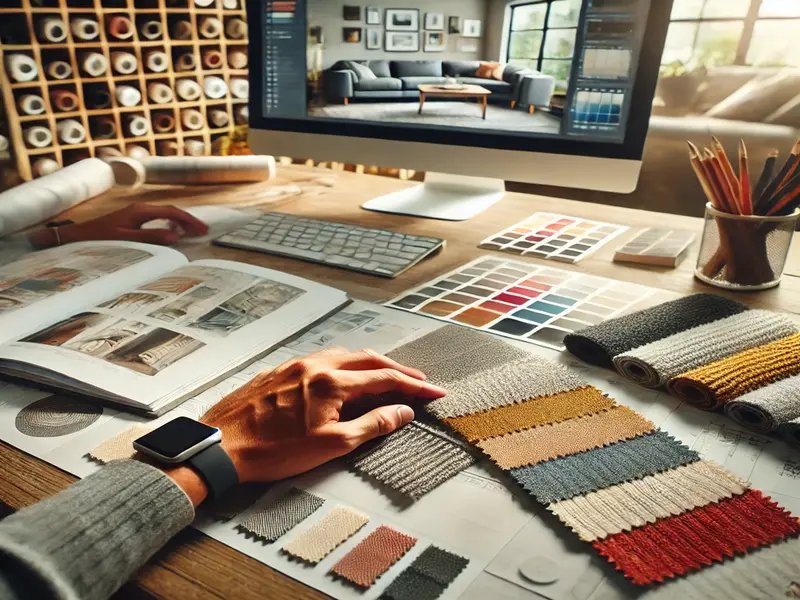
    Interior design is an artistic field that is very dynamic in nature, requiring a perfect blend of artistic vision and technical know-how. From a small apartment to large commercial space, the best design software can make the difference. The best interior design software is one which provides an intuitive user interface, high functionality, and excellent outputs. In this blog post, we will explore the best design software available today and how they can help benefit your interior design process as well as key features that you should look out for when choosing the right tool for your needs.

    Why You Need Best Design Software for Interior Designers:-

    As things stand in the competitive arena of interior design, trends must be anticipated and customer results must be exceptional. Design software streamlines this creative process by providing one with tools to visualize the space, create floor plans, and render realistic images in 3D. What is also possible with these programs is easy collaboration, project management, and client presentations-that are the backbone of developing successful client relationships.

    Having access to top design software can save time, decrease errors, and enhance the ability to express ideas properly. Whether a professional interior designer or an enthusiastic amateur, investing in the proper software is the key to success.

    Important Features of Interior Design Software:-

    To move into specific software packages, let's identify important features that are helpful to an interior designer with such software:

    • Friendly user interface: A non-futuristic layout for use in an easy navigation system of the user.
    • 3D visualization: In some respects, this capability provides designers with a sense of completing the design so the clients can see their future completed results.
    • Personalization: Ensure that the software has personalization options to allow you to customize according to your or your clients' preferences.
    • Collaboration tools: Ensure the integration with cloud storage and communication platforms for better collaboration between you, your clients, teams, and contractors.
    • Cost: Choose the one that suits your budget best, giving you what you want.

    Best Interior Design Softwares:-

    1. AutoCAD:

    Designed for: Best suited professionals who need proper technical draft, therefore detailed drawings in this niche.

    AutoCAD is thought of as one of the strongest and prime applications that are used in interior designing. Many designers do this for the right execution of 2D and 3D floor planning. You will have your detailed floor planning, elevation, and sectional with correct accuracy to depict the works before your client or your assigned persons.

     Features making it indispensable:

    • Accurate drafting tool.
    • Three-dimensional rendering and modeling.
    • Wide range of building materials and parts.
    • High-level customizations and scalability.

    Why It's Awesome for Interior Designers: The technical specification of AutoCAD is advanced, and it makes the instrument ideal for interior designers working on complex projects or jobs involving high-end scale production. It lets them make detailed draftsmanship and blueprints, often necessary for commercial design.

    2. SketchUp:

    For: Basic 3D modeling and quick conceptual design.

    SketchUp is an intuitive 3D modeling application, used primarily by interior designers for simple, quick models. It has become popular for conceptual design and preliminary project planning because of its intuitive design tools, where sketching accurate, visually attractive designs is easy.

    Major Attributes:

    • Easy drag-and-drop functionality.
    • Extensive pre-prepared models.
    • Instant visual feedback through real-time 3D modeling
    • The free version is accessible.

    Why It's Fantastic for Interior Designers: SketchUp is a super intuitive tool well-suited for new entrants into the design community, yet the advance features are great for seasoned pros. It is genuinely one of those beautiful tools used to get concepts visualised in really early design stages without allowing technical complexity to get it bogged down.

    3. Revit:

    Perfect for: Collaborative projects in building information modeling or BIM.

    Revit is another power tool produced from Autodesk. Mainly used in architectural designing and construction works, Revit can directly be applied onsite due to collaboration and real-time work with its BIM built-in technology. Its major usage includes developing the type of detailed 3D model and building system-lighting, electrical or plumbing system.

    Key Advantages:

    • Real time team cooperation and collaboration
    • Usage for advanced structural and building
    • Good modeling techniques
    • Ability in the Parametric modeling function and has an adaptive changes function.

    Why It's Great for Interior Designers: Revit's parametric design system automatically updates any and all models when changes are requested or made. This results in consistency across all aspects of your project, which is especially helpful to users working on large jobs who have many stakeholders input into the design.

    4. Chief Architect:

    Best for: Residential Design with Easy-to-use Flooring Planning Tools.

    Chief Architect is one of the best design software applications in use for interior designers in residential space. The application is ideal for designing 3D renderings, floor plans, and elevations. The software application was known for ease of use and high rendering quality.

    Key Features:

    • Auto building tools for walls, doors, windows, and roofs.
    • 3D visualization and virtual tours
    • Huge catalog of furniture, appliances, and fixtures.
    • Virtual reality capabilities for more immersive experiences.

    Why It's Great for Interior Designers: Chief Architect is designed with interior designers in mind. Its features make it simple to switch between 2D and 3D views and quickly adjust layouts and elements. This makes it particularly valuable for residential projects that require a lot of customizations.

    5. Roomstyler 3D Home Planner:

    Best for: DIYers and beginners who want a hassle-free tool.

    Roomstyler is a free online 3D home planning tool that lets you easily design floor plans and interiors. It is fantastic for interior designers who need to quickly make floor plans and test out various layouts and furniture pieces.

    Key Features:

    • Easy drag-and-drop interface.
    • 3D rendering in real time.
    • Extensive library of furniture and decor items.
    • No installation needed-it works directly in your web browser.

    It's Importance:- Roomstyler can be considered user-friendly; hence, it's absolutely great for interior design novice or professional interior designers working on a project. It's easy to utilize and can do quick design with instant visual feedback

    6. Fusion 360:

    Best for: Those who need a mix of CAD and 3D modeling.

    Another one by Autodesk for both CAD and 3D modeling is called Fusion 360, though it best suits interior designing for individuals who require really detailed 3D modeling and prototypes of furniture pieces or other interior designing-related things.

    Key Features are:

    • 3D CAD, CAM
    • Cloud-based collaboration through designs in real-time,
    • 3D modeling and integrated simulation,
    • Best suited to furniture and product design.

    Why It's Great for Interior Designers: Fusion 360 allows interior designers to make detailed designs for furniture and other products. It also has cloud-based features that allow teams to work easily with clients or contractors.

    7. Homestyler:

    Best for: Budget-friendly designers and fast visualization.

    Homestyler is free interior design software that is online. It uses drag-and-drop functionality to create floor plans and visualize interior designs. It is perfect for new users or for a rapid mock-up.

    Key Features:

    • Drag-and-drop furniture placement.
    • 2D and 3D views.
    • Library of real-world furniture and decor items.
    • Easy sharing and export options.

    Why It's Awesome for Interior Designers: Easy to navigate, Homestyler is an excellent entry-level design tool that can make the process work even for designers dealing with smaller projects or creating an easy-to-use tool to source ideas visualized on paper.

    Conclusion:-

    The best design software for interior designers depends on your specific needs and the scale of your projects. Whether you're creating detailed floor plans with AutoCAD, quickly visualizing concepts with SketchUp, or building 3D models with Revit, there’s software that can help streamline your design process and deliver impressive results.

    Consider factors like the complexity of your projects, your budget, and the type of design work you focus on when choosing your design software. Investing in the right tool will not only enhance your design capabilities but also improve your workflow, helping you deliver more value to your clients.


    Read more on:-

    For more information about engineering, architecture, and the building & construction sector, go through the posts related to the same topic on the Pinnacle IIT Blogs page.

    Find out more accurately what we are going to take off in the course of applying leading new technologies and urban design at Pinnacle IIT.

    Subscribe to our YouTube channel and blog websites to obtain all the up-to-date information relating to construction matters.

  • What Is Biophilic Design in [year]

    What Is Biophilic Design in [year]

    With continuing domination of the world by urbanization in 2024, it continues to push human beings further and further away from nature. This causes very deep impacts on our physical and mental health. Biophilic Design is the revolutionary approach to architecture and interiors that restores our bond with the natural world.

    Biophilic Design is more than just potting plants in a room. Light, water, materiality, and spatial forms all come together to constitute an environment that fosters wellness, productivity, and sustainability. This book probes the heart of Biophilic Design, its philosophy, its benefits, and how it has evolved as an important design philosophy of 2024.

    A Deeper Look into Biophilic Design:-

    What is Biophilic Design?

    Biophilia is the term used by biologist Edward O. Wilson to define a human's instinctual urge to connect with nature. Biophilic Design is derived from this idea; it is the attempt to recreate or include elements of nature in the environment created. This is more than aesthetic. It's the way of designing spaces as functional, sustainable, and healthy by incorporating natural elements, such as materials, plants, light, textures, and even the scents and sounds of nature.

    Biophilic Design in 2024 is led by innovation, combining modern technology with natural features to increase its impact on human well-being.

    Evolution of Biophilic Design:-

    Early Applications:

    Traditionally, architecture always had elements of nature. This includes courtyards, gardens, and verandas. However, with industrialization, these aspects fade away.

    The Modern Resurgence:

    Biophilic Design in the 21st century is a result of urban sprawl and its associated stressors. Architects and interior designers today actively incorporate greenery and natural materials to combat such challenges.

    Biophilic Design in [year]:-

    [year] is going to focus on immersive experiences with innovations like;

    • Responsive Environments: Smart lighting mimicking sunlight;
    • Sustainable Materials: Recycled and renewable;
    • Indoor Ecosystems: Self-sustaining green walls and aquaponics.

    Core Principles of Biophilic Design:-

    Direct Nature Connection:

    This comprises actual elements:

    • Living plants, green walls, and vertical gardens
    • Water features, fountains and indoor ponds
    • Sunlight entering the room or building through Skylights large windows

    Indirect Nature Connection:

    Drawing inspiration from the nature-materials and texture used 

    • Wood, stone and bamboo used as floor and furniture.
    • Textile material and décor design to produce nature-inspired patterns
    • Any form of imitation natural Light or Sound, for instance, the call of birds etc.

    Spatial Design Strategy:

    Spaces designed to feel like they belong in nature by end

    • Open, free flowing configurations like those of meadows or glades.
    • Cozy little caves for intimate moments or quiet reflection.
    • Movements that are like natural passage ways, like transitions.

    Benefits of Biophilic Design:-

    Physical Health Gains:

    Biophilic Design spaces improve air quality and reduce blood pressure and anxiety. Greenery in houses and workplaces helps to achieve better oxygen levels, eliminate fatigue, and improve well-being.

    Psychological Gains:

    The psycho-emotional benefits include reducing anxiety, depression, and stress. Findings have shown that proximity to nature improves a person's mood, enhances concentration, and hardiness.

    High Productivity:

    Implementation of Biophilic Design at the workplace leads to:

    • 15% productivity among the employees.
    • Focus and creativity in solving problems.
    • Fewer absenteeism cases, as mental well-being has improved.

    Sustainability:

    Eco-friendly material usage and practices lead to sustainability. Biophilic Design reduces energy consumption while promoting green living.

    Biophilic Design Trends [year]:-

    Urban Greenery:

    There is a trend of bringing greenery to rooftops and even creating vertical forests in urban spaces in order to combat pollution and heat islands.

    Smart Biophilic Systems:

    Technology will play an important role in 2024, such as using automated irrigation systems, air purifying plants in the house, and lighting systems simulating natural daylighting.

    Multi-Sensory Experiences:

    Designers want to find out how they can involve all senses using natural smells, touches, and even sounds in entirely immersive environments.

    Public Spaces:

    Public places, such as libraries, malls, and parks, adopt Biophilic Design in order to promote the common good and social relationships.

    How to Introduce Biophilic Design in Houses:-

    Houseplants:

    • Start with less demanding plants like pothos, snake plants, or ferns.
    • Select planters that fit well with your scheme of things.

    Natural Light:

    • Install expansive windows or use reflective surfaces to bring in more natural light.
    • Utilize light-filtering curtains to simulate the outside light.

    Earthy Materials:

    • Use wooden, rattan, or bamboo furniture.
    • Add stone finishes in the kitchens and bathrooms.

    Nature-Inspired Decoration:

    • Use wallpapers that have floral or botanical prints.
    • Hang nature-inspired artwork or photography.

    Biophilic Design for Offices:-

    Green Partitions:

    Replace conventional cubicle partitioning with living green partitions.

    Breakout Areas:

    Design areas with plants, comfortable seating, and access to natural light.

    Biophilic Meeting Rooms:

    Use natural textures and hues, and provide adequate levels of natural light to help stimulate creativity.

    Soundscapes:

    Play gentle soundscapes of water or birdsong to boost attention and minimize workplace stress.

    Commercial Applications of Biophilic Design:-

    Retail Spaces:

    Stores are using natural features to make shopping enjoyable for customers.

    Hotels and Resorts:

    Hospitality hotels and resorts are integrating this design to improve experiences to guests and enhance comfort during their stay.

    Healthcare Facilities:

    Hospitals and clinics are also done with the use of these elements to improve patients and staff recovery rates.

    Educational Institutions:

    School and universities have adopted Biophilic Design to ensure proper learning and performance from these students.

    Challenges of Biophilic Design:-

    While the benefits are evident, there are some challenges associated with Biophilic Design:

    • Cost: High initial investment in materials and technology.
    • Maintenance: Green walls and indoor plants need to be maintained continuously.
    • Space Constraints: In urban areas, space may not be available for large greenery.

    Modular green walls and low-maintenance plants are reducing these problems and making Biophilic Design more feasible in [year].


      Read more on:-

      For more information about engineering, architecture, and the building & construction sector, go through the posts related to the same topic on the Pinnacle IIT Blogs page.

      Find out more accurately what we are going to take off in the course of applying leading new technologies and urban design at Pinnacle IIT.

      Subscribe to our YouTube channel and blog websites to obtain all the up-to-date information relating to construction matters.
    • Smart Home Innovations for Interior Design in [year]

      Smart Home Innovations for Interior Design in [year]

      The invasion of technology into interior designing became the culture of today's society and made the idea of a “Smart Home” popular. A Smart Home is much more than an accumulation of high tech equipment; instead, it represents a way to improve comfort and functionality, besides aesthetic value, in one's environment. Innovation in smart homes redefines the ways of living and interacting with spaces through AI-controlled kitchen appliances and voice-controlled lighting systems

      This comprehensive guide answers the way smart home technologies change the game in interior design, thereby bringing visual beauty and functionality into a living space.

      Smart Home Technology and Modern Living:-

      Smart home technology is more about building an environment unified in every way, though it's not just a matter of convenience. This intelligent system controls lighting, temperature, security, and entertainment systems with voice command or simply with an application on the smartphone.

      Why it Matters:

      • Efficiency: Automation optimizes the usage of energy.
      • Aesthetics: Modern gadgets are slim and would blend into any modern design.
      • Personalization: A person may have configurations such that it reveals the mood or activity.

      Intelligent Lighting Solutions for Smart Homes: Mood Ambiance:-

      Lighting is the most influential interior design component. Smart lighting technologies can enable users to make brightness, color, or even direction adjustments to any lighting to achieve a desired ambiance for almost any event.

      Important Features:

      Scenes: Use predefined scenes like “Relax,” “Work,” or “Movie Night.” Color control: Use the lighting to match your mood or complement the decor.
      Energy Efficiency: Smart LED lights save energy and are durable.

      Examples:

      • Philips Hue: This is a smart bulb with a very wide number of colors that can be controlled by voice through an app.
      • LIFX: This is a high-lumen, Wi-Fi-enabled smart lighting for any room.

      Interior Design Tip: Reeded smart lighting is perfect for giving a clean and minimalist look for modern interiors.

      Smart Thermostats and Climate Control: Comfort Meets Design

      Climate control has never been smarter-or more stylish. Devices like the Nest Thermostat or Ecobee combine advanced technology with sleek designs, making sure your home stays comfortable while looking great.

      Key Benefits:

      • Energy Savings: Smart thermostats learn your habits to optimize heating and cooling schedules.
      • Remote Access: Control the temperature from anywhere using a smartphone app.
      • Integration: Many models sync with other smart devices for enhanced functionality.

      Interior Design Tips: Wall-mounted thermostats in minimalist designs fit most modern interiors.

      Smart Blinds and Curtains for Style and Privacy

      Window treatments are part of interior design. However, smart blinds and curtains are more advanced since they will change with the time of day or your preference with automation.

      Key Features to Consider:

      • Operation by Motor: Open and close blinds or curtains through an app or remote control
      • Smart Sensors: Automatically changes the treatment according to the intensity of sunlight.
      • Integration: With the lighting and thermostat system, this would be a perfect efficient system.

      Design Ideas:

      White-toned, motorized blinds. They look smart and sleek.
      Blackout smart curtains in the bedrooms. Total privacy with maximum energy saving.

      Multi-Room Audio and Entertainment Systems

      Music and entertainment can break or make the ambience of a house to a great extent. Wireless audio systems, like Sonos and Bose SoundTouch ensure that music streaming is made available across multiple rooms and delivers a great experience in every place.

      Advantages:

      • Wire-Free Feature: Remove cluttering cables and wires
      • Multi-rooms Zone Customization: Play different music for every room or sync house to house.
      • Voice-based Controlling: Control hands-free playlist through Alexa and Google Assistant.

      Tips:- Improve interior decor with mounted ceiling and/or wall speakers providing an audios-only aesthetic appearance and excellent sound.

      Smart Home Security: Safety Doesn't Have to Compromise on Design:-

      Safety always, but the look and feel of old security equipment run contrary to current designs. Smart home security devices introduce a new way in which safety can be ensured while the design is well maintained.

      Bestsellers:

      • Video Doorbell (Ring): Slim fit with compact design and an HD camera
      • Smart Lock (August Smart Lock): Keyless entry system with slim and sleek design
      • Indoor Cameras (Arlo): Compact design that flows perfectly with décor.

      Design Tip: Spy cameras or stylish covers for concealed beauty.

      Voice-Controlled Assistants and Smart Hubs:

      Smart hubs are the core of smart home systems like Amazon Echo, Google Nest Hub, and Apple HomePod. Such devices work with connected systems but provide the value of aesthetics in your homes.

      Important Features:

      • Voice Controls: Access all connected appliances
      • Digital Photo Frames: To display your favorite moments and enhance your space.
      • Compact Design: Fits very well with the décor of any room without overpowering it.

      Interior Tip: Position smart hubs on great-looking side tables or counters to maintain accessibility and aesthetic balance.

      Smart Kitchen Appliances: A Culinarily Revolutionary Approach:-

      Smart home technology is taken further into the kitchen. With this comes appliances which may make cooking easier, but still offer a touch of modernity.

      Notable Appliances:

      • Smart Refrigerators (e.g., Samsung Family Hub): Equipped with touch screens for recipes, calendars, and much more.
      • Smart Ovens, (June Oven): AI controlled cooking for perfect results time after time.
      • Smart Dishwashers: Optimise water and cycle use through smartphone controlled app.

      Interior Design Benefit: Integrate smart appliances behind sleek cabinetry for a cohesive modern design of the kitchen.

      The Emergence of Smart Bathrooms

      Bathrooms are no longer limited to functional spaces. The luxurious retreats have always been what smart bathrooms give in the integration of innovation with comfort and the finest cutting-edge technology.

      Ones to Watch:

      • Smart Mirrors: Mirror that features touch screen, dimmer, and thermostat controls
      • Warm Floors: Scheduled and programmed systems for maximum comfort.
      • Voice-Activated Shower: Uses voice commands for flow of water and temperature

      Home Tip: Infuse technology with spa like aesthetic by using minimalist accessories

      Smart Home Technology and Sustainable Living

      There is smart home technology, which avoids wasting energy usage. This includes smart thermometers and automated systems for example and energy saving light bulbs among others. It all comes together to offer sustainability.

      Benefits:

      • Track usage for improvement: The use of energy monitoring capabilities
      • Carbon Footprints: Minimum carbon footprint in that waste is reduced from automated systems
      • Eco-friendly products: Using intelligent devices built from recycled products or material.

      Conclusion:-

      The intelligent innovations in the smart home will be changing the face of interior design. They would allow for infinite possibilities about making living spaces more attractive, functional, and environmental. Intelligent lighting, kitchen automation, among others make modern living more efficient and elegant.

      Investing in smart home technology increases the level of your lifestyle as well as adds long-term value to your property. With the passage of time, the integration of technology with interior design will continue to become more seamless and exciting.


      Read more on:-

      For more information about engineering, architecture, and the building & construction sector, go through the posts related to the same topic on the Pinnacle IIT Blogs page.

      Find out more accurately what we are going to take off in the course of applying leading new technologies and urban design at Pinnacle IIT.

      Subscribe to our YouTube channel and blog websites to obtain all the up-to-date information relating to construction matters.
    • Emerging Trends in Interior Design in [year]

      Emerging Trends in Interior Design in [year]

      Interior design is a field that constantly evolves. Fresh styles and innovations constantly shape our approach toward living and working spaces. Entering [year], Trends in Interior Design evolve towards sustainability, technology, and personalization: the interior, as useful as it is gorgeous. Let's dive deep into the most prominent trends of the year.

      Environmentally Friendly and Sustainable Designs:-

      Sustainability is the big concern in interior design wherein most people adopted eco-friendly designs for homes and offices. Eco-friendly materials reduce your carbon footprint and enhance the ambiance of your space. Sustainable designs aim at durability and low environmental impact without sacrificing aesthetics.

      Important Features of Sustainable Designs:

      • Using recycled materials, such as using reclaimed wood for furniture or reusing items.
      • Using energy-efficient lighting, this includes LED bulbs and the use of solar lights.
      • Use of natural fabrics in upholstery and for curtains-the material used for this involves cotton, bamboo, jute.
      • All the above trends are linked to the leading of healthy lifestyles while working-for sustainability worldwide.

      Biophilic Design – Nature into the Built Environment:-

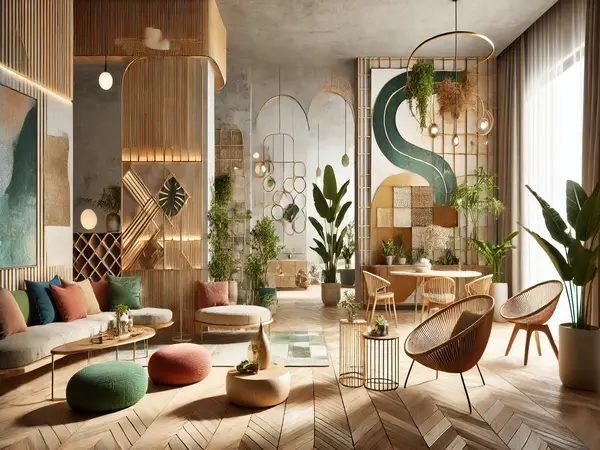
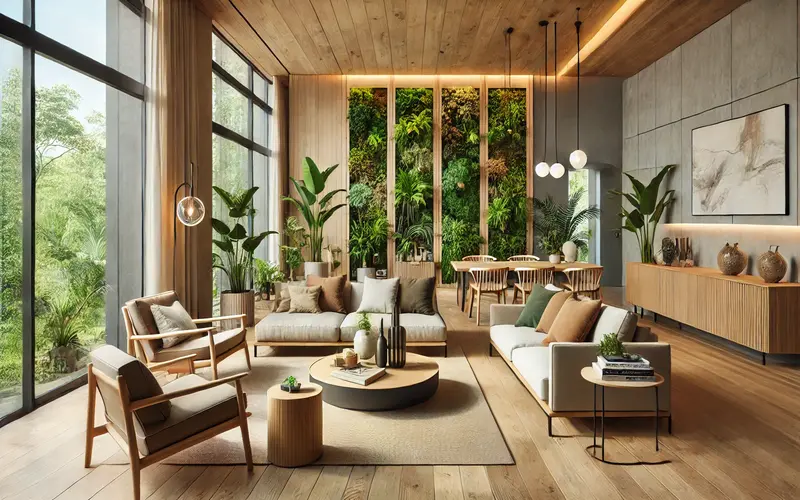
      Biophilic design is one of the trends that is on the rise, providing natural elements to interiors by which people can feel some quietness and connection to nature in its setting. It focuses more on having nature's elements, such as greens, light, and other natural textures, combined with creating calm environments.

      Biophilic Elements Ideas:

      • Living walls and vertical gardens: The greenery thrives inside, bringing the outdoors inside the city apartments.
      • Maximizing natural light: Installing large windows, glass doors, or skylights for sunlight to flood into interiors.
      • Earthy color palette: Shades of green, terracotta, and beige create a warm atmosphere and bring comfort.

      Biophilic elements have been proven to improve mood, reduce stress, and increase productivity and, therefore, are very ideal for both homes and offices.

      Biophilic Design trends in interior design

      Minimalism with a maximalist touch:-

      Minimalism has taken shape in a way where a splash of color and one's personality stand as a beacon of today's designs within the house. That being said, “minimal maximalism” combines simplicity and character.

      Components of Minimal Maximalism:

      • Bold Piece of Furniture : Flashiest centerpiece : Vibrantly coloured sofa; gigantic lamp etc.
      • Layered Textures: Combine glass elements with those such as stone and unfinished wood for texture diversity.
      • Personalized Art and Décor: Give curated collections of art or antique pieces to share your one-of-a-kind story.

      Innately, this concept is all about juxtaposing the age-old popularity of minimalism and bright maximalist designs so that your spaces become more livelier with the reflection of a character.

      Smart Houses and Technology Integrated Interiors:-

      Technologies are changing the designing of interiors; traditional houses become futuristic houses. Smart homes are all about comfort, efficiency, and luxury.

      Tech-Integrated Interior features that can be commonly found:

      • Voice-Controlled systems: Devices like smart speakers and connected light systems make life easier
      • In-built charging stations: Furniture with the capabilities to hold wireless charging does not let devices get power in an unorganized manner.
      • Virtual and Augmented Reality Tools: These devices can help you test out designs with different layouts and color palettes virtually, so you are able to get the perfect one that suits your needs well.

      Technology integration in the designing of interiors makes it far more functional and in line with today's fast-paced living styles.

      Smart Houses and Technology Integrated Interiors Trends In Interior Design

      Vintage Revival:-

      Nostalgia is to the fore as vintage-inspired designs return to life. It is all about timelessness, and bringing these timeless elements into your modern space.

      Vintage Design Elements:

      Retro Colors and Patterns: That retro mustard yellows, avocado greens, and floral wallpapers have an olden air about them.
      Antique Furniture: Add a vintage armchair, mirror, or lamp for that touch of history to your house.
      Mixed Eras: Combine old with new items for a balance of eclectic.

      Warmth and character add the vintage trends, so it's not like a normal living space.

      Multi-Purpose Rooms:-

      Thanks to new trends of telecommuting and smaller housing, it is impossible without multifunctional rooms. Varied room design allows full use of the space but does not lose its unique charm.

      How to design a multipurpose room:

      • Convertible Furniture: Invest in items like sofa beds, Murphy beds or extendible tables for double-duty functioning
      • Zoning Techniques: Use of rugs, shelves, lights for creating different areas within open-plan.
      • Hidden storage solutions: Use smart under-the-stair storage, hidden beds, or in the walls to gain a clutter-free atmosphere.

      This is an answer of problems in the new living where each of the square feet used means something.

      Multi-Purpose Rooms trends in interior design

      Bold and Dramatic Colors:-

      Neutrals are the hottest ticket on the list but bold and dramatic colors seem to be centering themselves in [Year]. So such colors bring energy, and sophistication to interior space.

      How to Welcome Bold Colors:

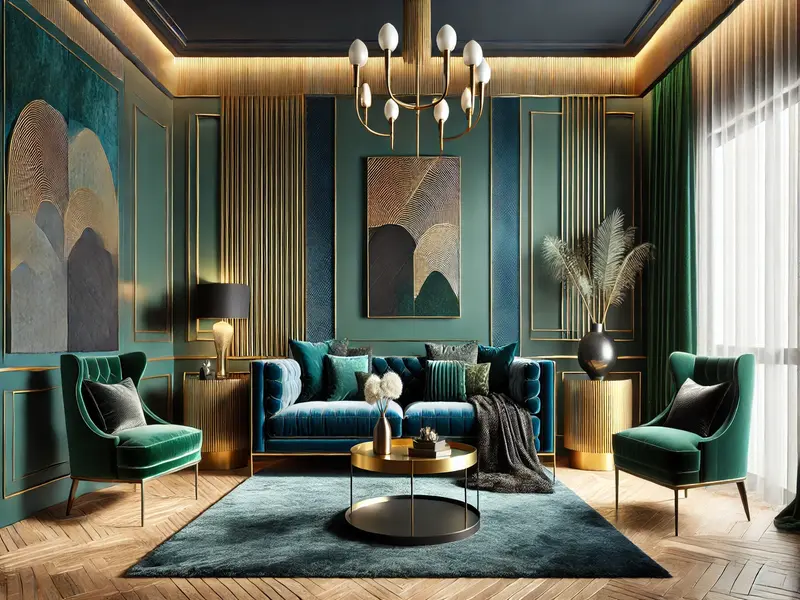
      • Jewel Tones: This involves the use of emerald greens, sapphire blues, or deep purples for accent walls, furniture, or decorative items.
      • Two-Tone Walls: painting contrasting or complementary colors- brings about an extraordinary effect of the visual.
      • Monochromatic schemes: Play around with different tints and shades of the same color for a cohesive yet dramatic look.

      Bold colors are making statements which will allow you to personalize your space with confidence and flair.

      Textured and Layered Surfaces

      Texture is what will make a flat surface turn into an interactive piece to be explored with the human touch and sensibility of a space.

      The Best Texture Trends:

      • Plastered or Lime-Washed Walls: The surface has that nicely rustic appearance to the ruggedness of it all.
      • Mixed Material Combinations: Combine elements such as wood, metal, and glass for an harmonious but lively texture.
      • Layers of Textiles: Throw plush rugs, velvet throws, and knitted cushions around for a snugly warm atmosphere.

      Layering texture really adds depth and makes for visually and physically interesting spaces.

      Outdoor Living Rooms:-

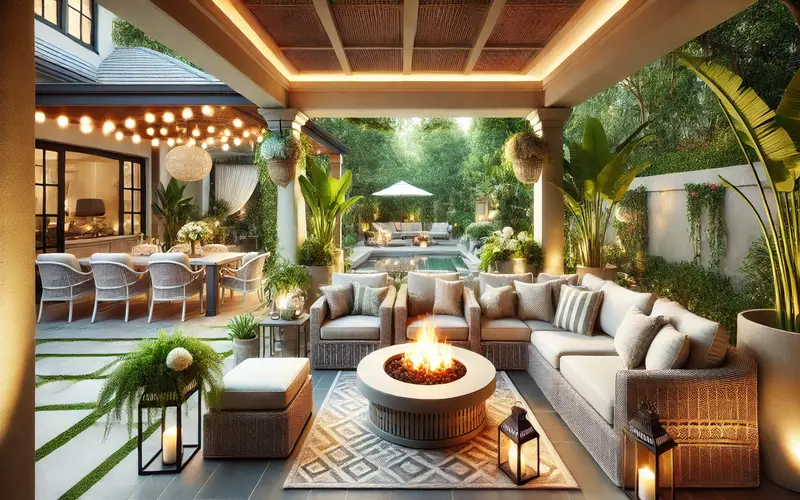
      Actually, the principle behind modern design is blurring interior versus exterior living.

      Outdoor Living Must-Haves:

      • Affordable Furnishing: A weather-resistant yet chic setting
      • Functional Accents: An outdoor kitchen, fire pit, or pergola gets outdoor spaces to function in ways that add comfortability
      • Lighting: LED solar lights or string fairies

      These rooms make a much-needed place of respite to either party hard or unwind.

      Customization and Personalization:-

      The desire for custom bespoke interiors has fuelled their demand.

      How to Attain Personalized Spaces:

      • Custom Furniture: Made especially for your space and to your taste.
      • Personal Décor: Show family heirlooms, homemade artwork, or monogrammed accessories.
      • Theme-Based Rooms: Create spaces inspired by hobbies, travel memories, or favorite periods in history.

      Personalized interiors are what make a home one-of-a-kind because of the individual tastes of their owner.


      Read more on:-

      For more information about engineering, architecture, and the building & construction sector, go through the posts related to the same topic on the Pinnacle IIT Blogs page.

      Find out more accurately what we are going to take off in the course of applying leading new technologies and urban design at Pinnacle IIT.

      Subscribe to our YouTube channel and blog websites to obtain all the up-to-date information relating to construction matters.
    • Essential Skills For Interior Designers

      Essential Skills For Interior Designers

      Interior design is a dynamic field requiring creativity, technical knowledge, and interpersonal skills. From beginners to experienced designers, one has to develop different kinds of skills in order to excel in the competitive field. Here's an all-inclusive guide for the core skills that an interior designer must have, how relevant they are, and actionable tips to help them develop it.

      1. Creativity and Artistic Vision:-

      Interior design is signature creativity. They are in a position to conceive some extraordinary places according to their client's preference. The skill can only be utilized if a designer thinks creatively about his work by considering what works today would work tomorrow or not and making time-less designs. The work of the interior designers must therefore combine aesthetics and practice to provide places that appear great as well as are of good utility.

      Why It Matters: Creativity helps in designing concepts that are unique and memorable.

      How to Improve:

      • Study different styles and trends in designs.
      • Create mood boards to try out various aesthetics.
      • Visit museums, galleries, and architectural landmarks for inspiration.

      2. Communication skills:-

      Designing space is teamwork. The best way to ensure that the clients, contractors, and vendors are on the same page is effective communication. Miscommunication often leads to delays, extra costs, and dissatisfied clients. Designers have to express their ideas clearly; listen to feedback constructively and communicate technical details in a manner that is easy for stakeholders to understand. This keeps everyone on the same page and ensures smooth execution from concept to completion.

      Why It Matters: Clear communication prevents misunderstandings and ensures smooth operations of projects.

      How to Improve:

      • Actively listen to clients
      • Express your ideas through drawings and digital renderings.
      • Acquire a good negotiation skill when dealing with vendors.

      3. Technical Competency:-

      The interior designer of today should be skilled with the tools and technology that make work easier for them. Software and technical tool proficiency makes the job not only efficient but also allows designers to produce detailed, precise, and professional-grade outputs. To stay on par and to serve high-tech clients who appreciate the latest solutions, one needs to be updated about the latest developments.

      Key Tools to Master:

      • CAD software such as AutoCAD or SketchUp.
      • BIM Tools like Revit.
      • Rendering Software, like Lumion and V-Ray.

      Improving Knowledge:

      • Workshops or Online courses to learn specific tools
      • Update yourself about the latest versions of software and new releases.

      4. Spatial Awareness:-

      Space management requires an understanding of spatial use. Good spatial awareness takes note of where and how elements relate with respect to each other in the space and makes sure there is no wasted inch, in short makes all the inches work very effectively. It also sees the way people are moving in the area and bases decisions on improving comfortability and accessibility.

      Why Does it Matter: Bad layouts bring crampy or unsystematic layouts.

      How to Improve:

      • Practice designing layouts for various types of rooms.
      • Understand human ergonomics and how people move through spaces.
      • Use 3D modeling software to generate spatial arrangement ideas.

      5. Observation of Details:-

      Intricate details are what count in interior design, as in color coordination and material selection. In fact, this ability produces an outcome where every item flows perfectly together to portray a comprehensive and finished concept. Observing details can also be seen as something to do with quality control, which produces an execution that does match the concept.

      Why: Ignoring details would sometimes leave the design feeling imperfect or unpolished in a way.

      How to Improve:

      • For every phase of design, make checklists.
      • Try different textures, patterns, and finishes.
      • Check projects for accuracy before showing them.
      Observation of Details skills

      6. Problem-Solving Skills:-

      At times, design projects will experience some unexpected setbacks like budget constraints or material shortages. A designer can come up with a solution that will be compatible with the goals of a project in a short time. Always thinking about how to rethink a design component or negotiating with vendors to make adjustments on the spot will always keep a project on track and in front of clients' expectations.

      Why It Matters: Creative problem solving keeps the project on track.

      Improvement Techniques:

      • Be flexible and receptive.
      • Develop contingency plans for common issues.
      • Learn from previous projects to anticipate what may go wrong.

      7. Business Acumen:-

      Interior designers are entrepreneurs or freelancers. Thus, they must know the basics of business. It ranges from budgeting to marketing, the bottom line in ensuring that interior design stays viable. The better a designer is at handling his business acumen, the more amicable he'll be to his client and good with money, and so forth, the more present he'd be in the market.

      Why It Matters: Great business skills ensure stability and growth in finances as well as professionally.

      How to Improve:

      • Take courses on marketing, branding, and acquiring clients
      • Be informed of project management and budgeting
      • Network with other designers for potential collaboration opportunities.

      8. Sustainable Design Knowledge:-

      Interior design is soon emerging as the new trend and that is because it's the green-conscious client's prescription. It's more about minimizing waste, using green material and designing energy-efficient spaces. Applying sustainable knowledge will not only ensure the survival of the environment but add to the credibility of the designer as some who thinks ahead.

      Why It Matters: Environmentally friendly designs avoid waste as well as make healthy environments.

      How to Improve:

      • Use materials and products with green certifications.
      • Use natural lighting and energy-efficient systems.
      • Keep informed of sustainable design trends.
      Sustainable Design Knowledge Skills

      9. Time Management:-

      Interior designers deal with multiple projects, deadlines, and stakeholders. Proper time management ensures that all aspects of a project are completed on time without compromising the quality. Designers need to prioritize tasks, manage client expectations, and streamline workflows to ensure productivity.

      Why It Matters: Efficient time management improves productivity and client satisfaction.

      10. Aesthetic Sense:-

      A good sense of aesthetics is a foundation for great harmonious designs. This sense of aesthetics will help designers create color balance, texture, and layout in a manner that elicits the perfect mood. It also involves keeping a check on new trends while carrying on with personal style that clients recognize and appreciate.

      Why It Matters: Clients often choose designers based on their unique style and taste.


      Read more on:-

      For more information about engineering, architecture, and the building & construction sector, go through the posts related to the same topic on the Pinnacle IIT Blogs page.

      Find out more accurately what we are going to take off in the course of applying leading new technologies and urban design at Pinnacle IIT.

      Subscribe to our YouTube channel and blog websites to obtain all the up-to-date information relating to construction matters.
    • Top 5 Interior Design Courses in Delhi for 2024

      Top 5 Interior Design Courses in Delhi for 2024

      Interior design is a dynamic and constantly evolving field that includes creativity, functionality, and aesthetics. Most aspiring designers look for courses that provide the best education and exposure. Delhi, being a hub for arts and culture, is home to some of the top interior design institutes in India. This blog explores the top 5 interior design courses in Delhi in 2024, helping you make an informed choice.

      To understand the profession better, read our guide to essential skills for interior designers. These would have allowed people to survive in the competitive world of interior design.

      1. National Institute of Design (NID), Delhi:-

      Why NID for Interior Design?

      National Institute of Design is a leading institute for design education. The interior designing course is an excellent and perfect combination of traditional as well as modern methodologies of design.

      Course Summary:

      • Duration: 4 years (Bachelors)
      • Modules involved are space planning, furniture design, and 3D visualization
      • World-class infrastructures and faculty support

      Fee Structure: Approximate ₹2,50,000 per year
      Career Scope after the Course: Graduates tend to get hired by the top design firms or start their own independent projects.

      To understand more about the growth of interior designers in the industry, read this report.

      2. Pearl Academy:-

      Stand out at Pearl Academy's curriculum. Always an innovative approach, which provides best learning to interior design aspirants. It caters curriculum aligned with global industry requirement. Global exposure to the world

      Highlights of the courses:-

      • It has undergraduate and post graduate programmes
      • Focuses much on sustainable and smart designs of interiors
      • It encourages industry exposure through workshops or internship

      Fee: $3,50,000 per year
      Why: It is a first rank. Pearl Academy provides mentorship with industry experts and live project opportunities. You can also have an insight into future trends in interior design to be ahead of the curve.

      3. Sushant School of Design (SSD), Gurgaon (Delhi NCR):-

      Gateway to a Futuristic Interior Design Career. The Ansal University houses the Sushant School of Design. The institute has adopted a techno-driven approach towards interior design education.

      Course Highlights:-

      • BIM Integration
      • Studio-based Learning Methods
      • International Collaboration

      Tuition Fees: ₹2,00,000 per year
      Unique Features: The SSD believes in the practice of real-world projects. Thus, students are ready for industry. Learn more about how BIM is changing the game for interior design.

      4. Delhi School of Architecture and Design (DSAD):-

      Affordable and Comprehensive Learning DSAD offers an excellent balance of affordability and quality education. It’s a perfect choice for students seeking budget-friendly options.

      Course Highlights:

      • Offers diploma, undergraduate, and certificate programs
      • Strong focus on technical skills like CAD and 3D rendering
      • Guest lectures by renowned designers

      Fee Structure: Starting at ₹1,50,000 per annum

      Career Pathways: Graduates frequently venture into entrepreneurship or join top architectural firms.

      5. Istituto Marangoni, Delhi:-

      Luxury Meets Creativity. Istituto Marangoni is known for luxury interior design. If high-end design is your thing, there is no better place.

      Course Highlights:

      • Advanced techniques in space optimization
      • Workshops conducted by global experts
      • Access to a global alumni network

      Fee Structure: ₹6,00,000 per year

      Why Choose This Course?: Course suited for those wanting to specialise in high-end/luxury residential, commercial or hospitality projects. Check the interior design market trends to understand what the industry demands.

      Conclusion:-

      Choosing the right interior design course is the first step toward a fulfilling career. With institutes like NID, Pearl Academy, and others offering world-class education in Delhi, you’re sure to find a program that aligns with your aspirations.

      Remember to also explore other resources on the basic interior design skills and BIM's impact on interior design to expand your knowledge base. It is now time to take the first step and turn your passion into a professional career in interior design!


      Read more on:-

      For more information about engineering, architecture, and the building & construction sector, go through the posts related to the same topic on the Pinnacle IIT Blogs page.

      Find out more accurately what we are going to take off in the course of applying leading new technologies and urban design at Pinnacle IIT.

      Subscribe to our YouTube channel and blog websites to obtain all the up-to-date information relating to construction matters.